
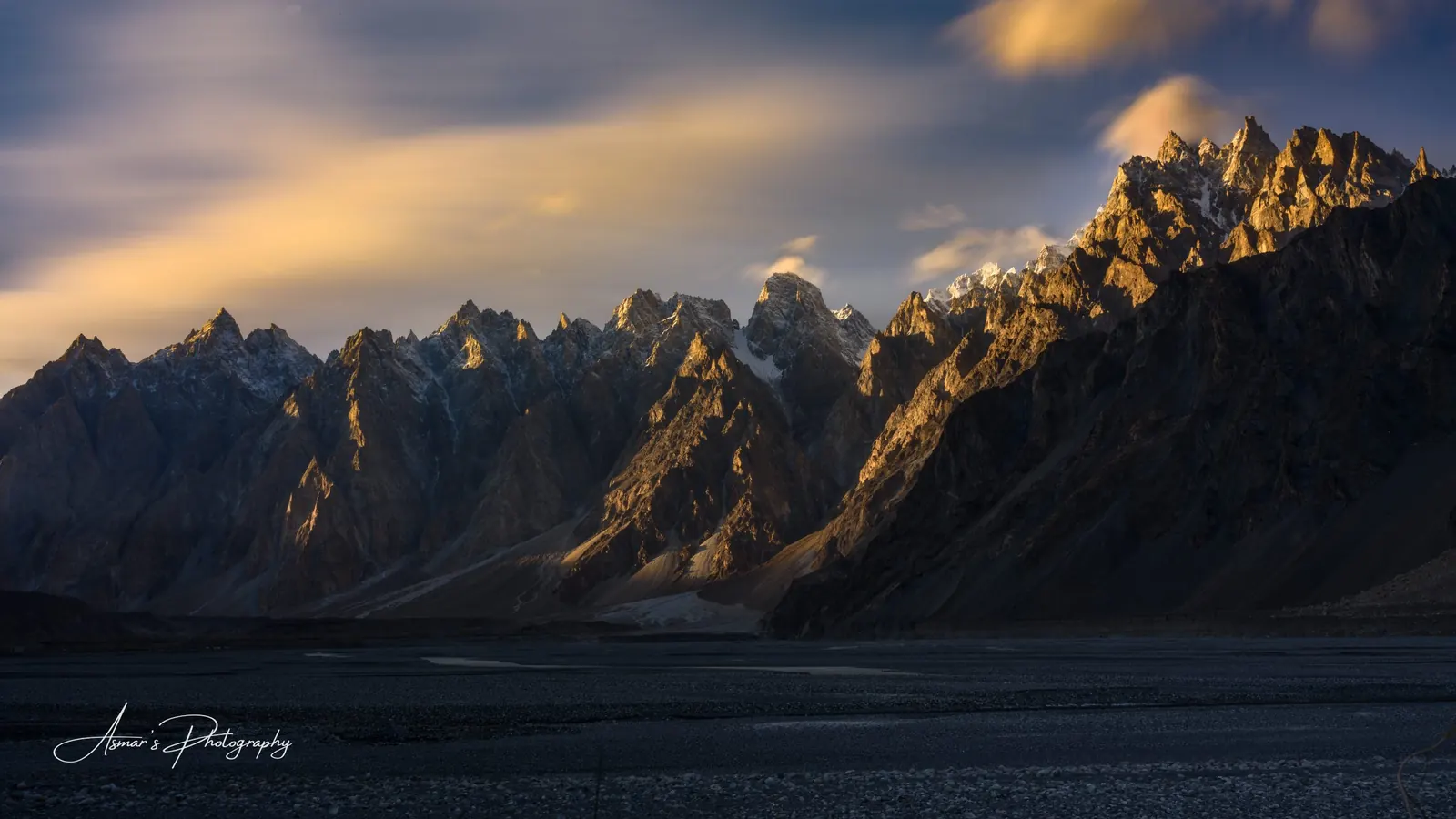
Passu Cones Photography Tour
Upper Hunza, also called Gojal: the cathedral spires of Tupopdan, two great glaciers and the last stretch of the Karakoram Highway before China.
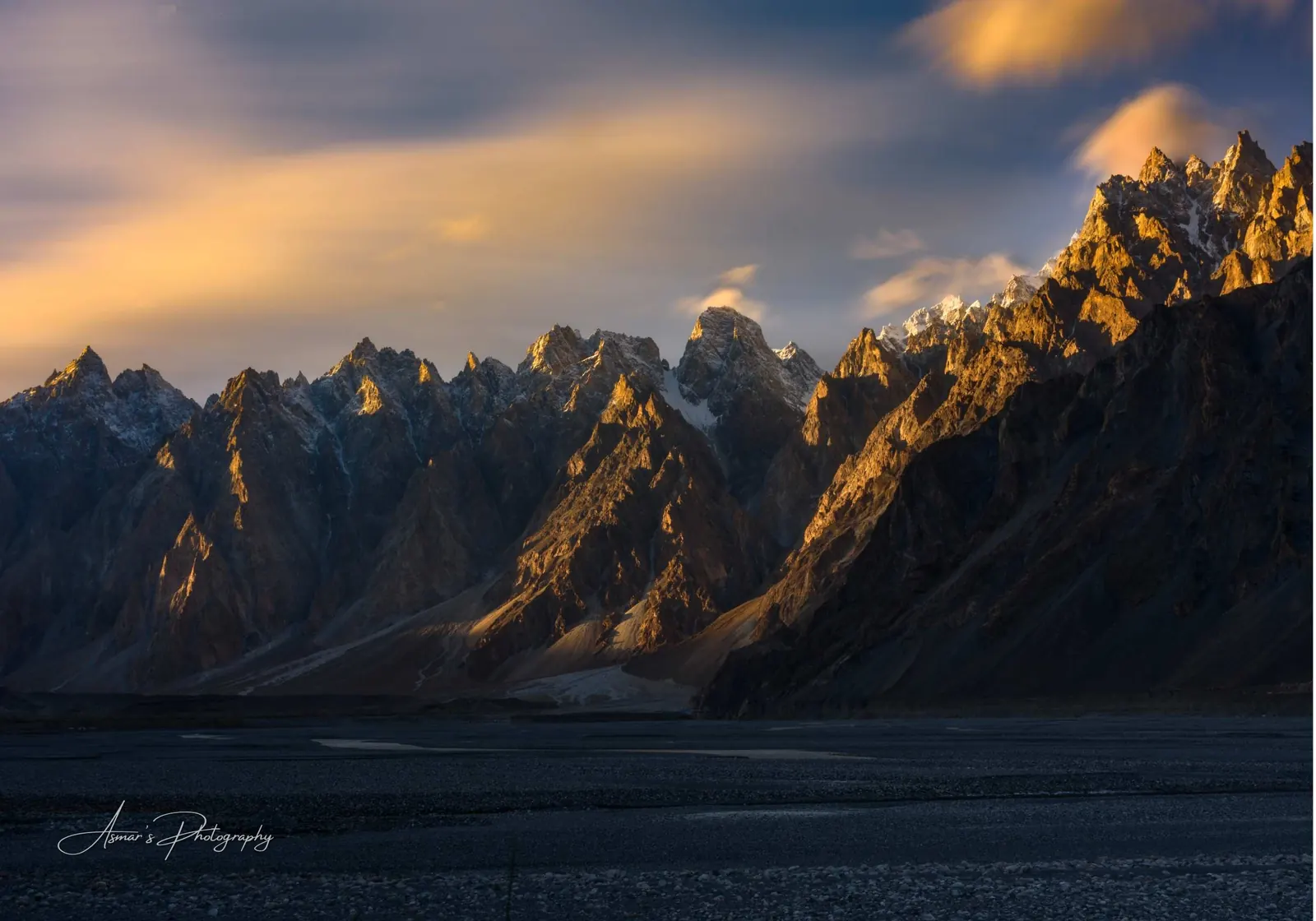
The Passu Cones are the most recognisable skyline in Pakistan: a wall of granite needles, 6,106 metres at the highest point, standing directly over the Karakoram Highway.
Passu rewards patience more than distance. The cones face west, so they light up late in the day, and the best frames come from walking a few hundred metres off the road into the fields, the river flats or onto the glacier moraine.
I use Passu or Gulmit as a base for two or three nights. That gives time for a dusk and a dawn on the cones, a morning at Attabad Lake, and a day up the highway toward the Khunjerab Pass.
- Best season
- April to early November; cones light best at dusk
- Altitude
- About 2,400 m at Passu; 4,693 m at Khunjerab Pass
- Base
- Passu or Gulmit
- Access
- Karakoram Highway, around 45 minutes beyond Karimabad
Locations
What you will photograph
Passu Cones from the highway and fields
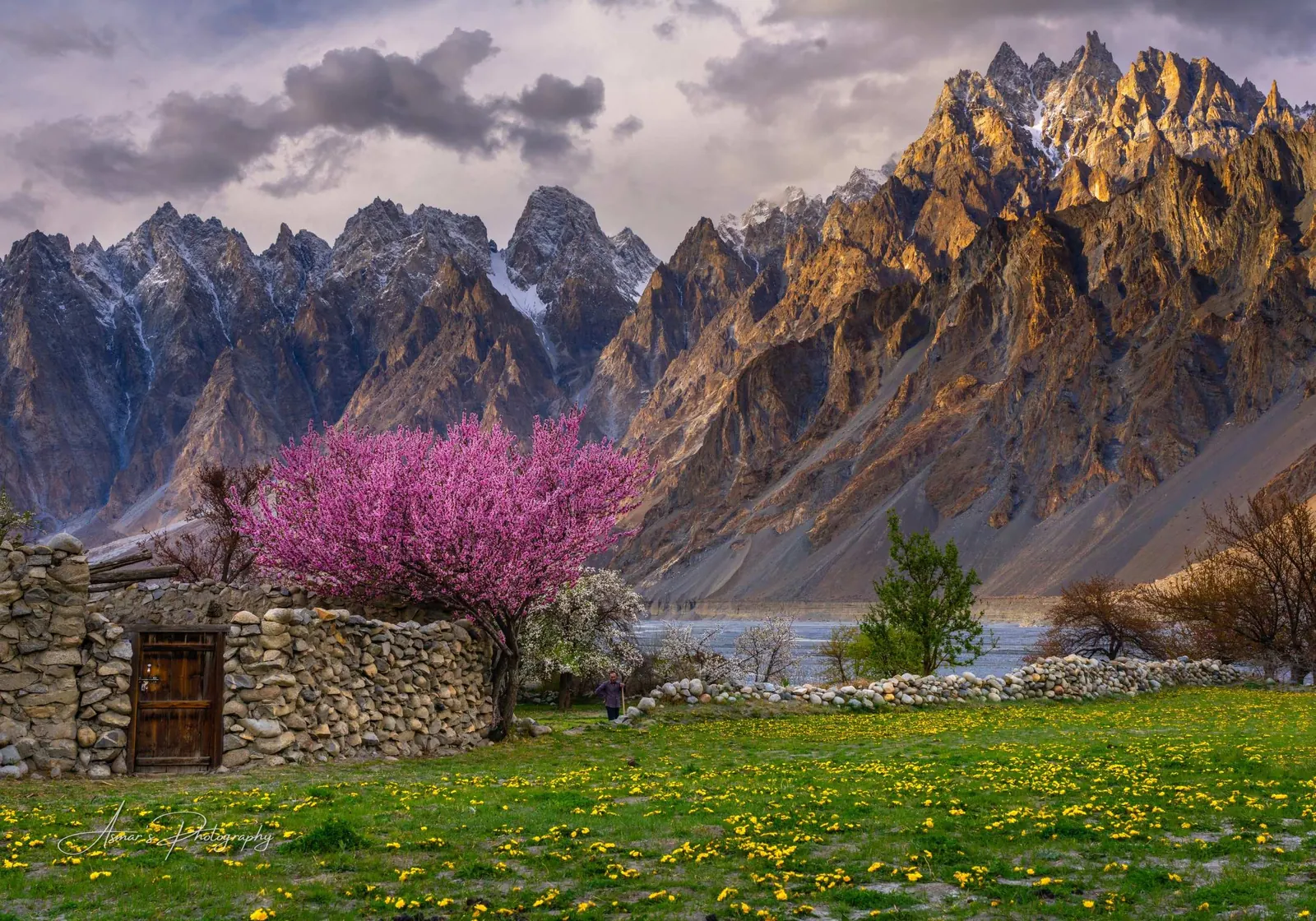
The straight run of road into Passu is the well-known frame. The quieter ones are from the barley fields and the river bed, where foreground changes with the season.
Hussaini suspension bridge
A plank bridge across the Hunza River with the cones as a backdrop. Early morning has the fewest people.
Passu and Batura glaciers
Passu Glacier is a short walk from the road; Batura, about 57 km long, is one of the longest glaciers outside the polar regions.
Borith Lake
A small lake on the moraine between the two glaciers, calm at dawn and good for reflections of the surrounding peaks.
Attabad Lake and Gulmit
Turquoise water under bare rock walls, with old Gulmit village above it.
Khunjerab road
The highway climbs through Sost and Khunjerab National Park to the Chinese border at 4,693 m, with a chance of ibex and marmots along the way.
Light and season
When to go
- The cones take warm light from mid-afternoon to last light. Cloud that catches on the summits after a weather change gives the strongest frames.
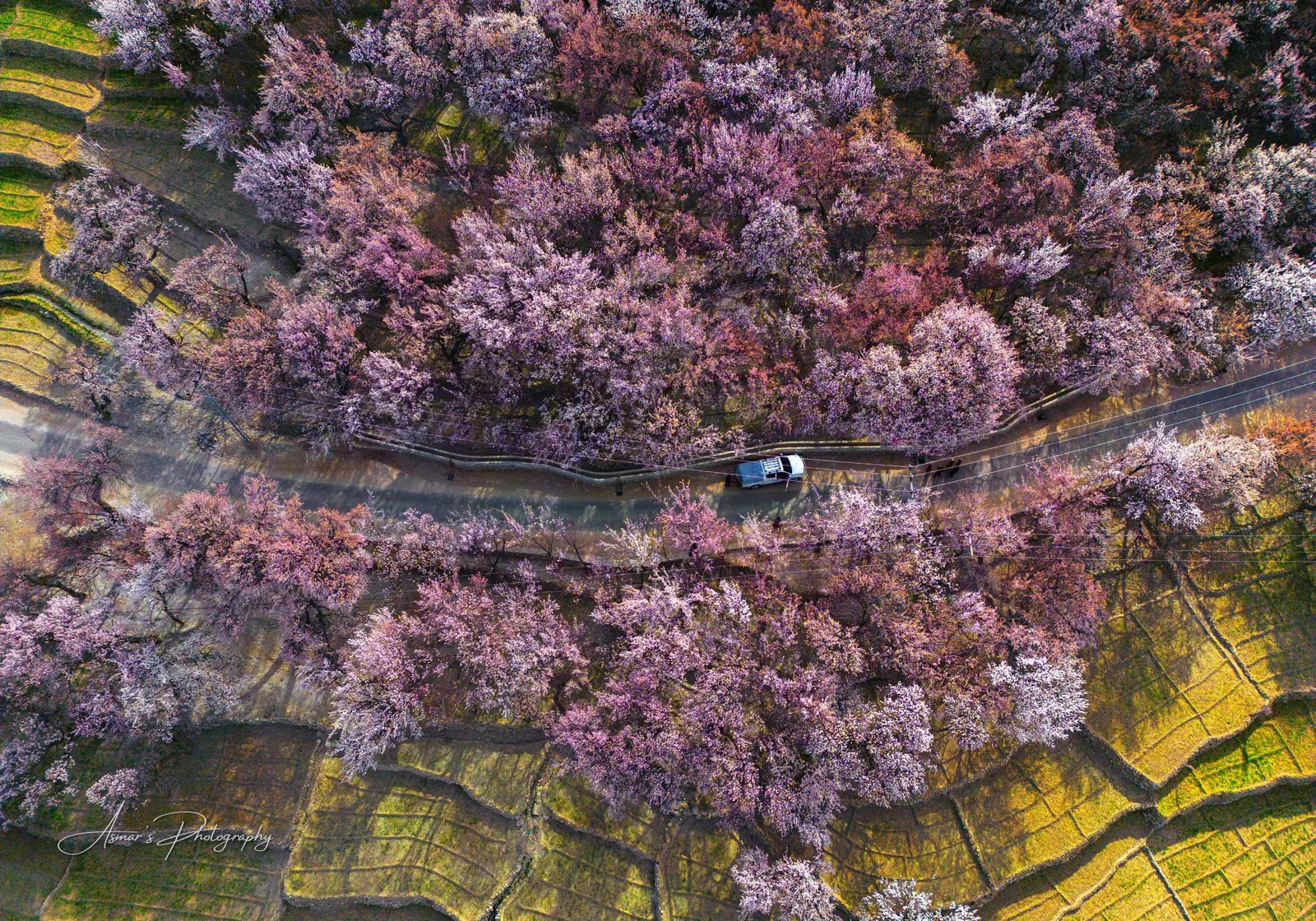
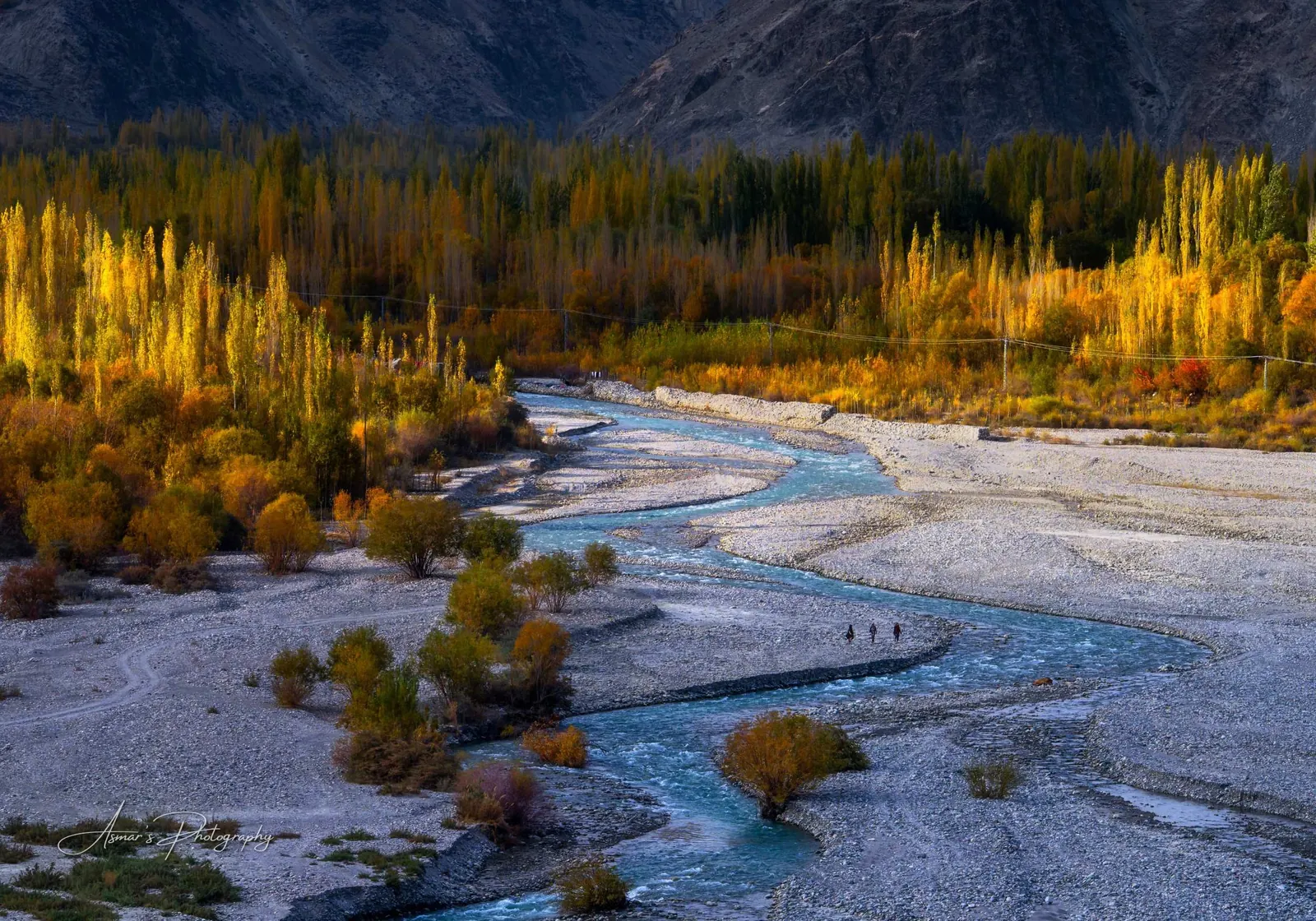
- Blossom reaches Passu later than lower Hunza, usually around mid-April, and autumn colour arrives in the second half of October.
- The Khunjerab Pass is normally open to visitors from spring to late autumn and closed by snow in winter.
See the month-by-month guide to the best time to photograph Pakistan.
From my archive
Photographs from Passu Cones & Upper Hunza

Practical notes
Before you travel
- Nights are cold at this altitude even in summer; bring a warm layer for dawn sessions.
- The glacier walks are short but on loose moraine. Sturdy shoes are enough; no technical gear is needed.
- A telephoto lens isolates individual spires; a wide lens works from the river flats.
- The day to Khunjerab gains more than 2,000 m, so it is scheduled after a couple of nights at Passu.
Plan your trip
Photograph Passu Cones & Upper Hunza with me
Tell me your dates and what you want to photograph, and I will plan a private itinerary around the light. Tours are operated through Travelbug, the travel company I co-founded, which arranges transport, stays and permits.
Every tour is privately quoted. No fixed packages or departure dates.
Questions
Good to know
Where are the Passu Cones?
In Upper Hunza (Gojal), Gilgit-Baltistan, beside the Karakoram Highway and about 45 minutes north of Karimabad. The highest point of the massif, Tupopdan, is 6,106 m.
What is the best time of day to photograph the Passu Cones?
Late afternoon to dusk, because the cones face west. Dawn works for silhouettes and for the river and bridge foregrounds.
Do I need to trek to photograph Passu?
No. The main viewpoints are beside the road or a short walk from it. Longer walks onto the glaciers are optional.
Can I visit the Khunjerab Pass on the same trip?
Yes, as a day trip from Passu when the pass is open. It is high, at 4,693 m, so it is planned after you have spent a few nights at altitude.
Keep exploring
Related tours and guides

Muhammad Asmar Hussain
Award-winning Pakistani landscape photographer, Sony Brand Ambassador for Landscape Photography, TEDx speaker and Co-Founder of Travelbug. Published by National Geographic and a winner at the Sony World Photography Awards. More about Asmar.