
Hunza Valley Photography Tour
Seven-thousand-metre peaks above terraced villages, two ancient forts and the most famous autumn in Pakistan, photographed with someone who has returned every year for 18 years.
Hunza is where most photographers fall for Pakistan. The valley sits at about 2,500 metres on the Karakoram Highway, ringed by Rakaposhi, Ultar Sar and Ladyfinger Peak, and almost every bend in the road is a composition.
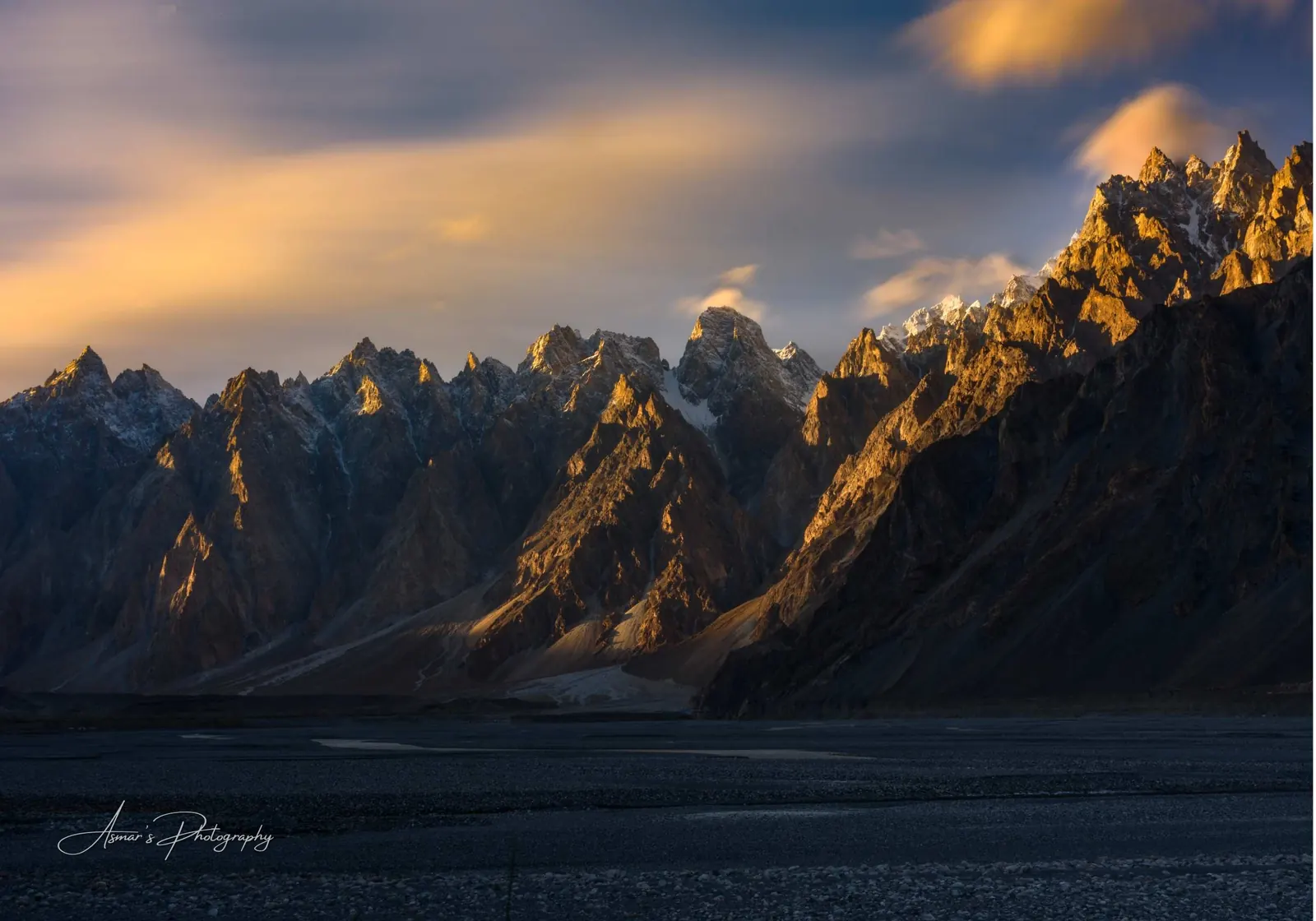
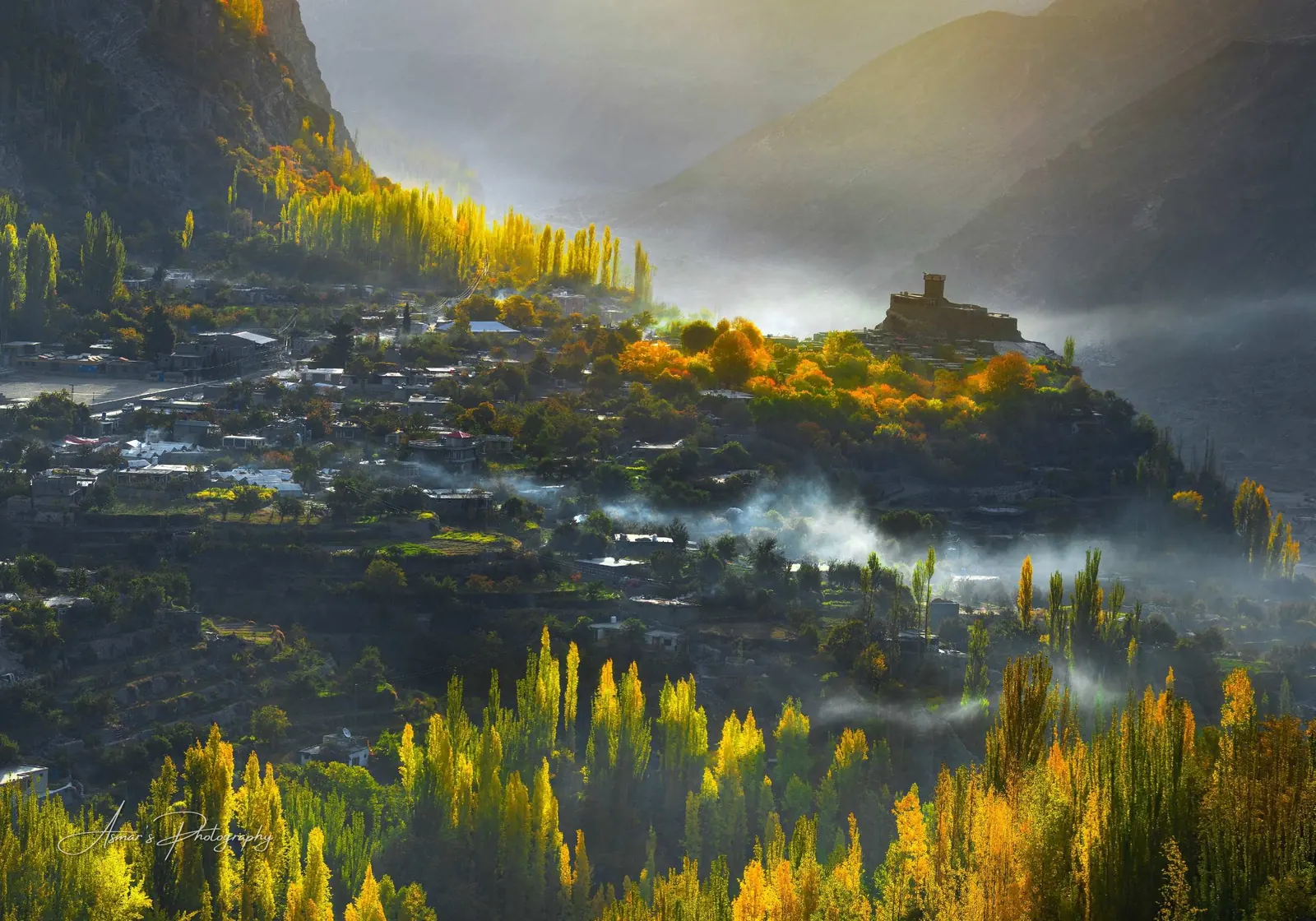
I have photographed Hunza in every season since I first picked up a camera, and I plan each tour around one question: where will the light be good, and at what hour? Rakaposhi takes the first sun, the Passu Cones burn at dusk, and Altit Fort is at its best when morning mist is still lying in the valley below.
A Hunza photography tour is the easiest of the northern routes to travel. Roads are paved, hotels are comfortable, and the main viewpoints are a short walk from the vehicle, so it suits a first visit to Pakistan as well as a return trip built around one season.
- Best season
- Mid-October to early November for autumn; late March to mid-April for blossom
- Altitude
- About 2,500 m at Karimabad
- Base
- Karimabad, with nights in Gulmit or Passu
- Access
- Flight to Gilgit or the Karakoram Highway from Islamabad
Locations
What you will photograph
Eagle's Nest, Duikar
The classic sunrise and sunset balcony above Karimabad, with Rakaposhi, Ultar Sar, Ladyfinger and Golden Peak in one sweep.
Altit and Baltit forts
Altit is roughly 1,100 years old and stands on a sheer cliff over the Hunza River; Baltit watches over Karimabad from above. Both work best in soft early light.
Attabad Lake
A turquoise lake created by a landslide in 2010. Calm mornings give clean reflections; from above it reads as a ribbon of colour between bare rock.
Passu Cones
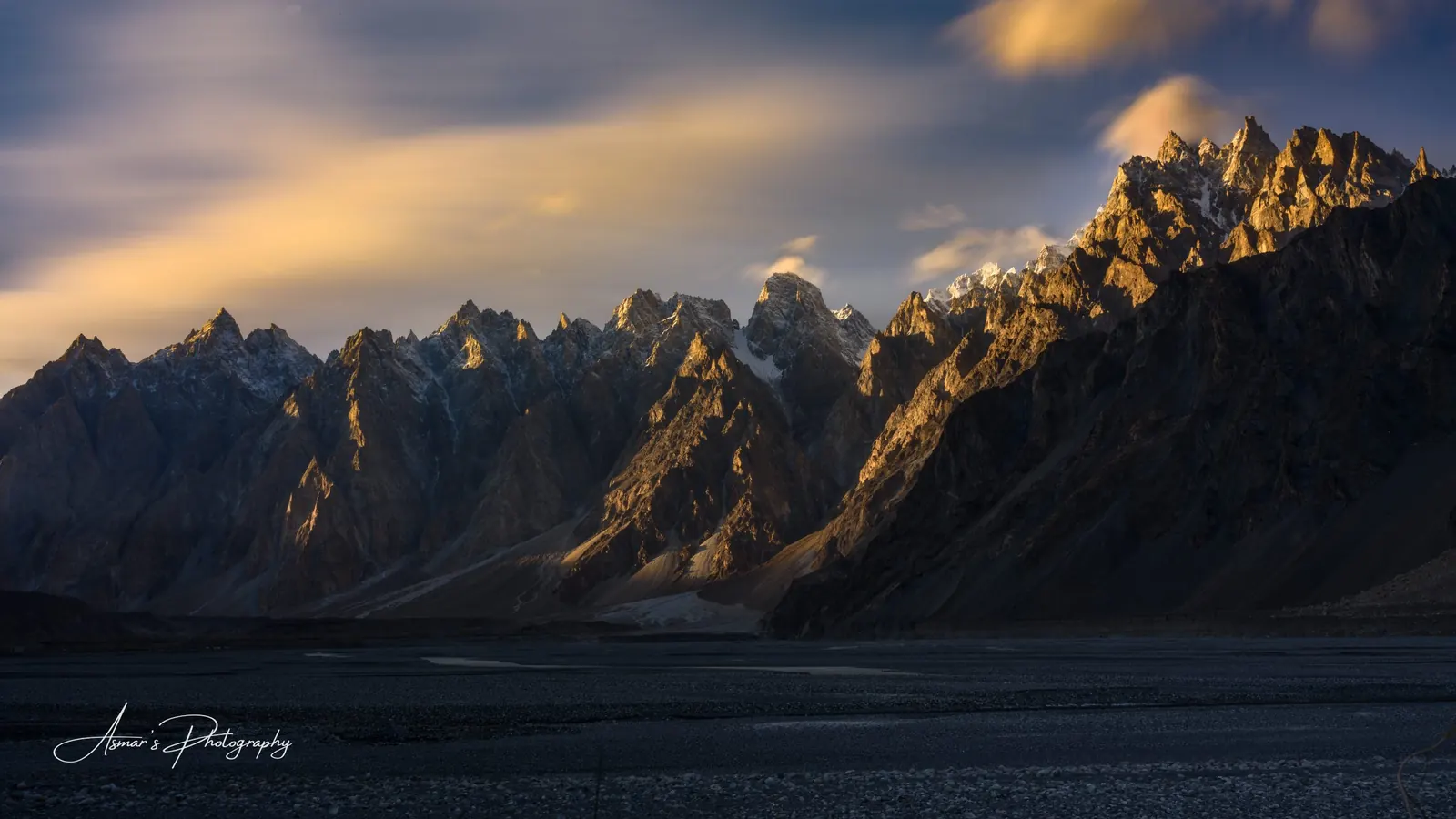
The serrated Tupopdan massif, 6,106 m, seen from the Karakoram Highway and from the fields around Passu and Hussaini. It is the dusk location of the tour.
Rakaposhi from the valley floor
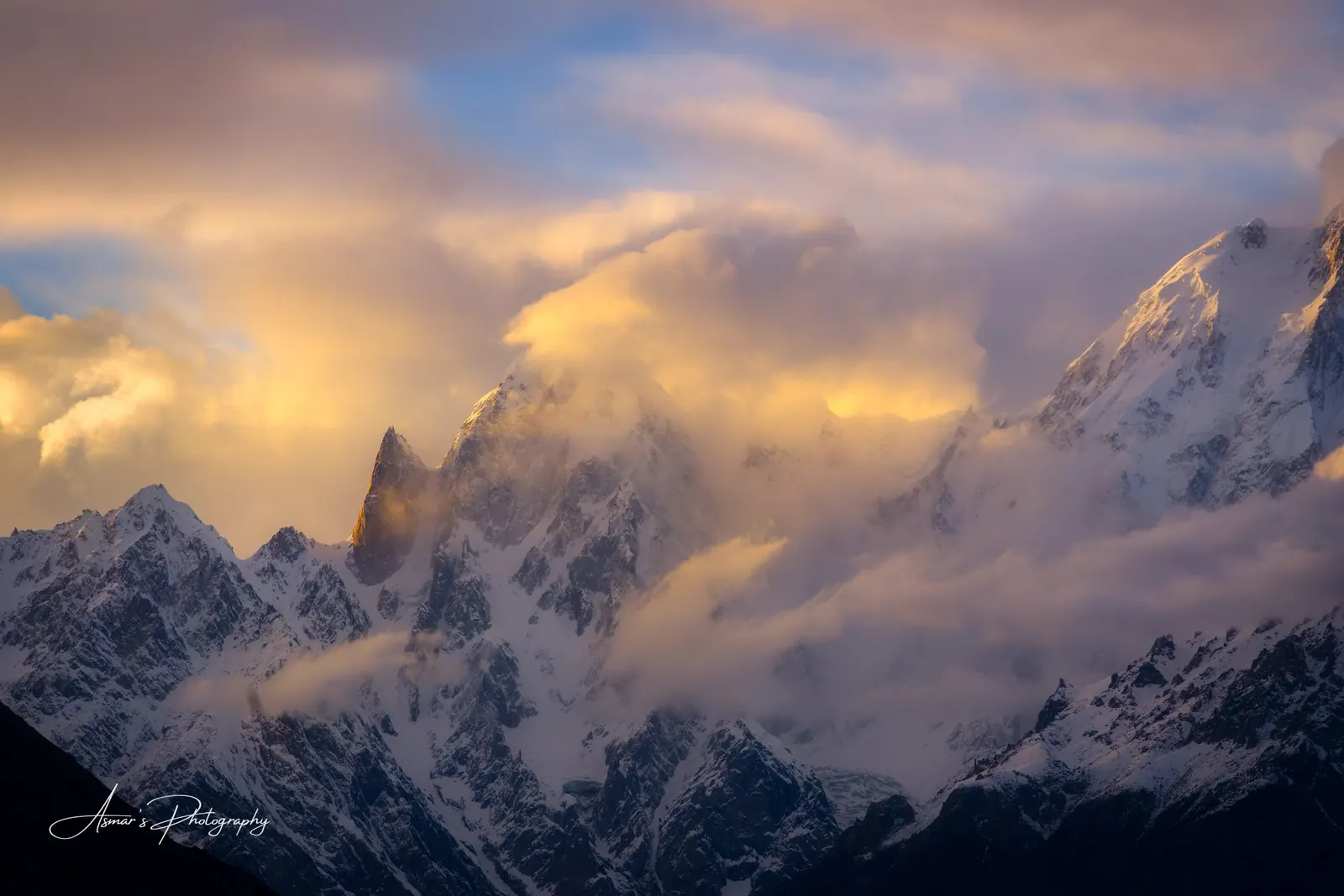
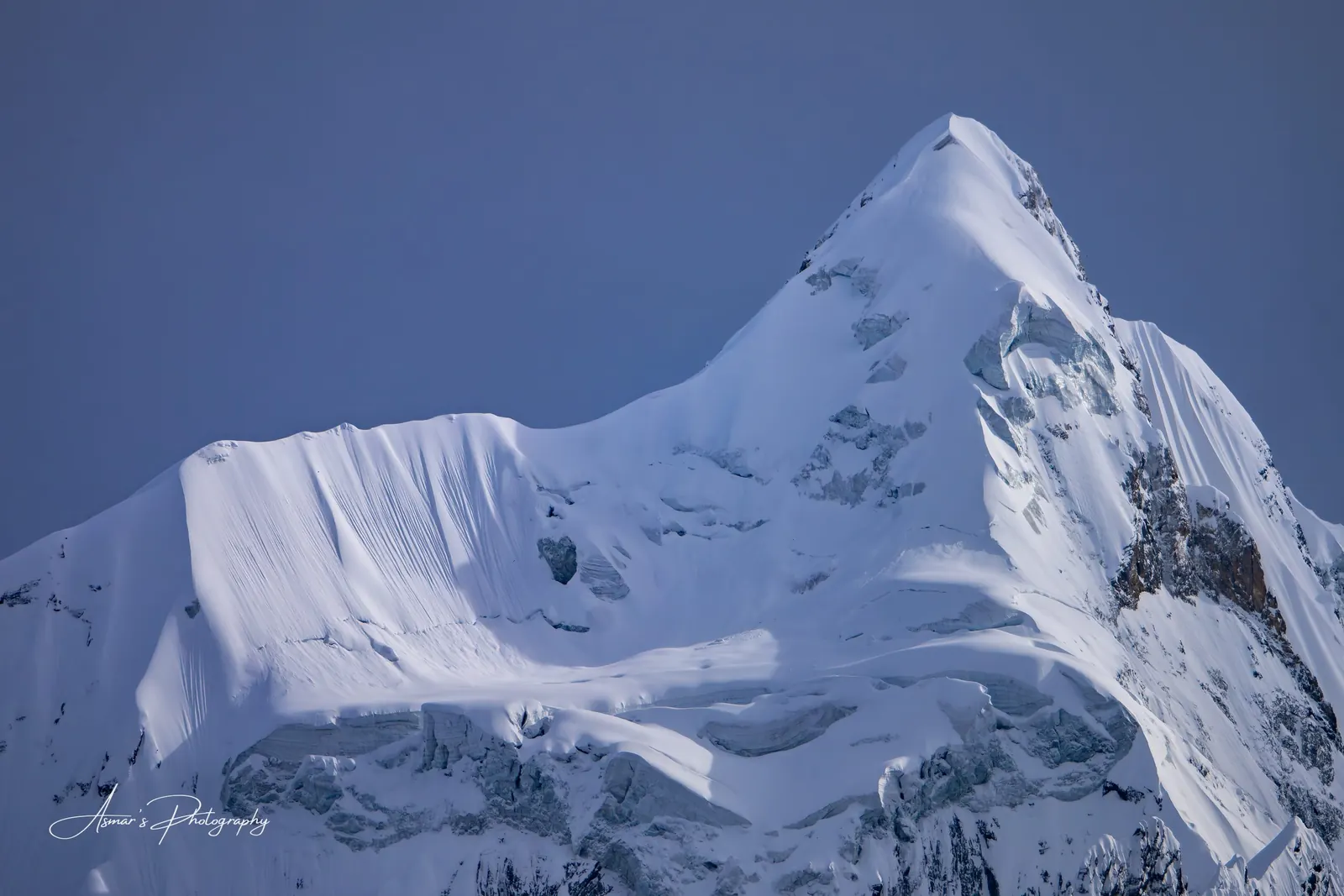
At 7,788 m, Rakaposhi rises almost six vertical kilometres above the river. Telephoto compression at first light is the shot.
Hussaini suspension bridge
A long plank bridge over the Hunza River with the Passu Cones behind it, good for scale and for people in the landscape.
Light and season
When to go
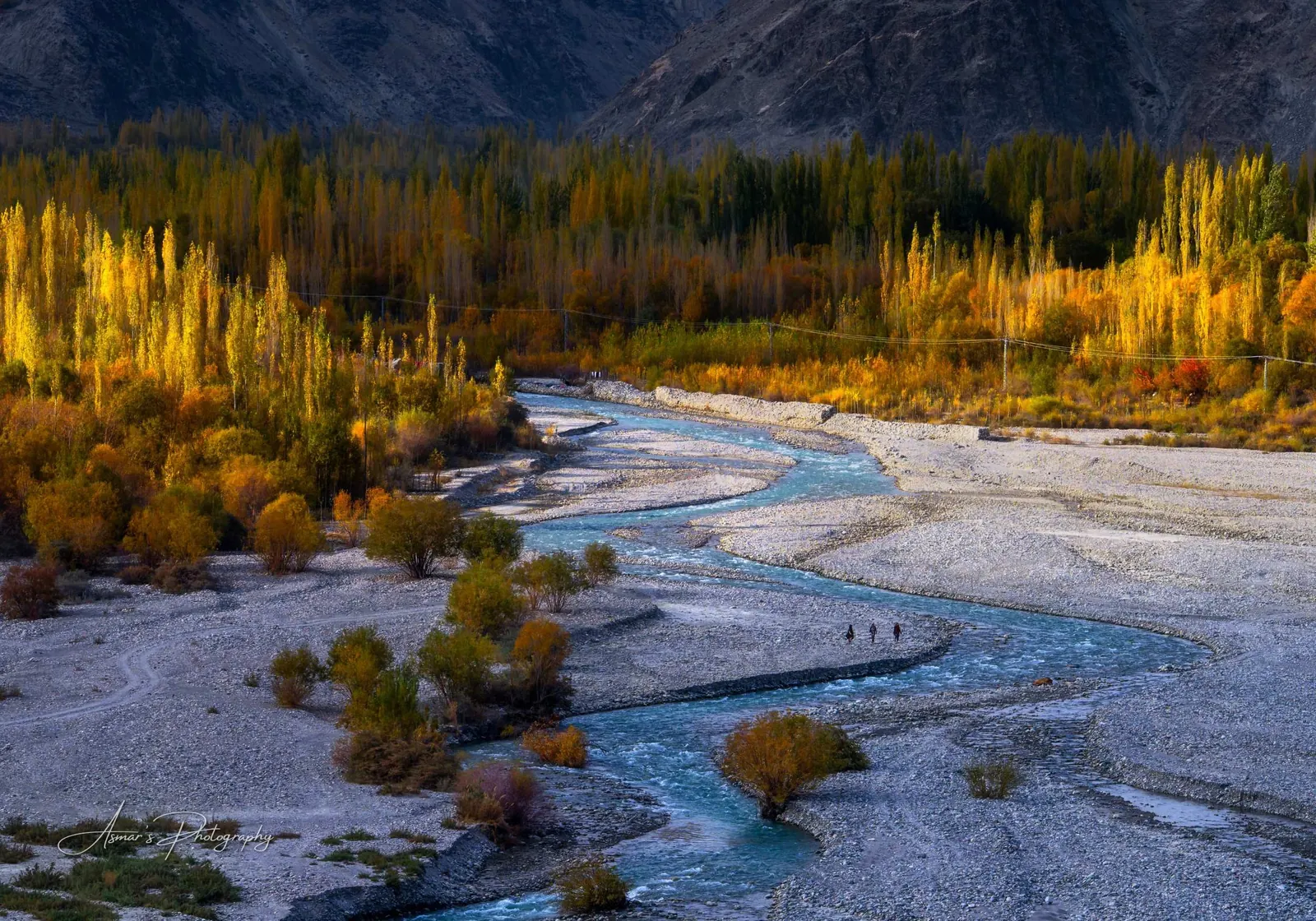
- Autumn peaks in a short window, usually the last two weeks of October into early November, when poplar and apricot trees turn gold and red under the first snow on the peaks.
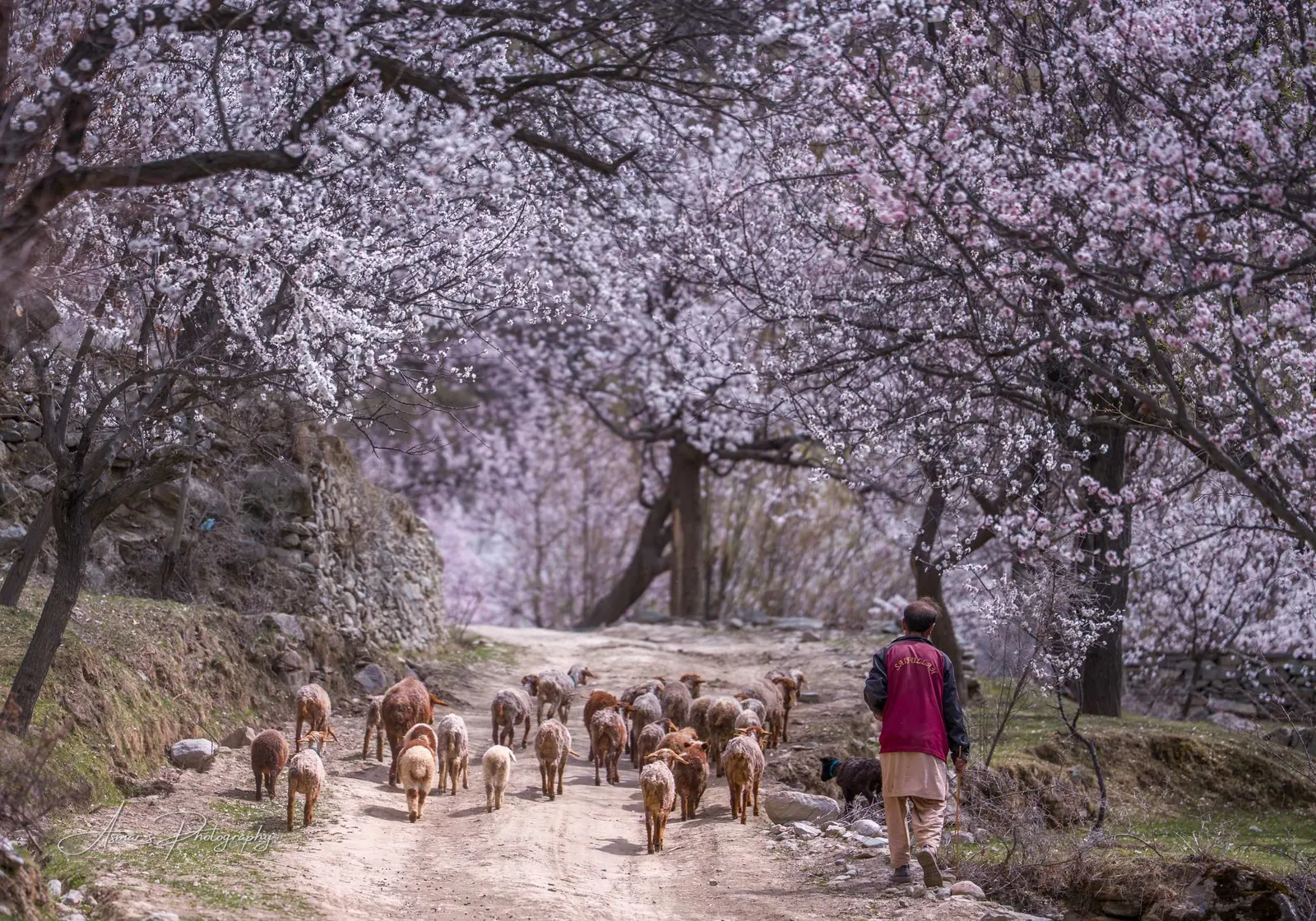
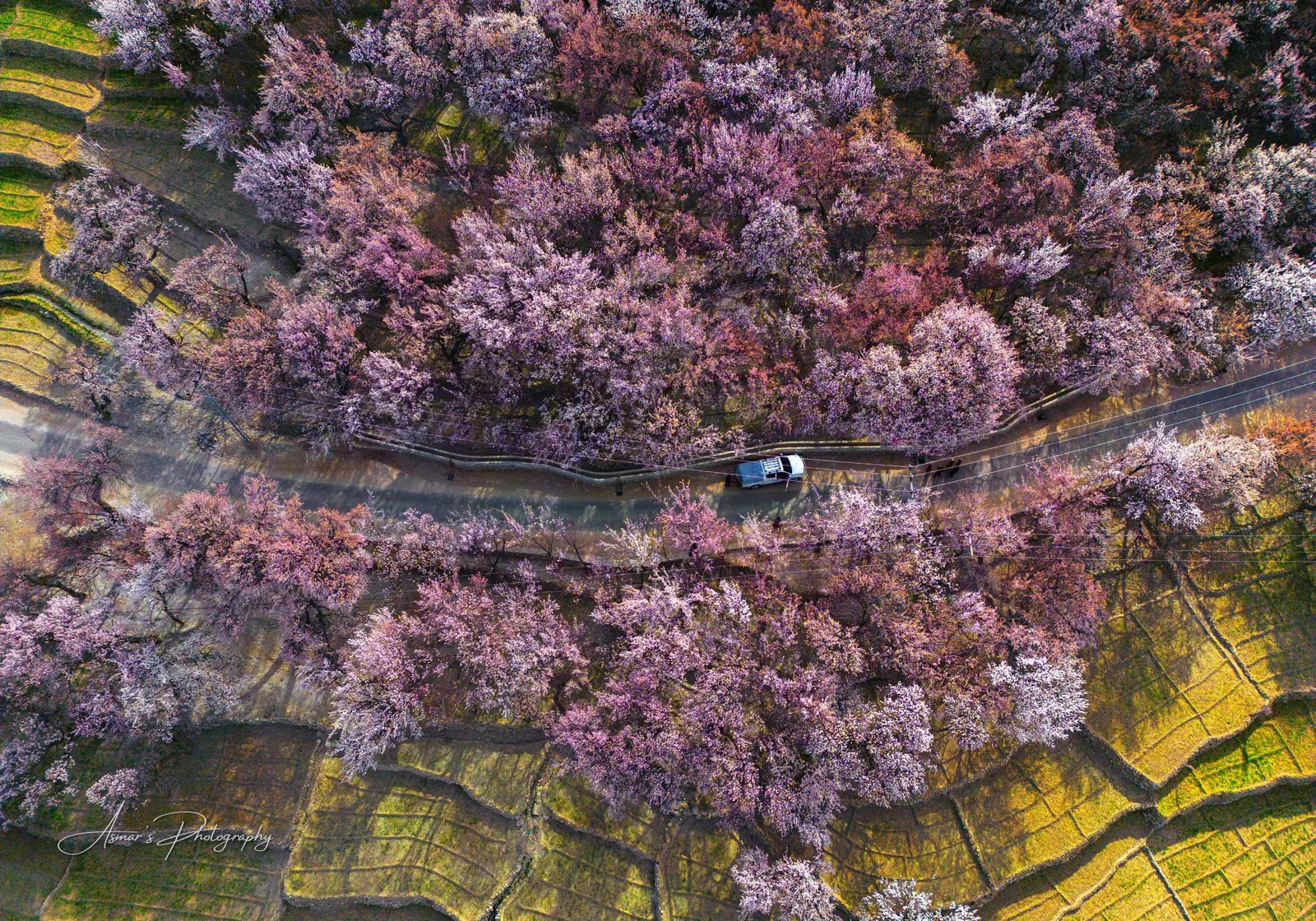
- Spring blossom moves up the valley over about three weeks: lower Hunza first in late March, upper Hunza around Passu by mid-April.
- Summer brings green terraces and long days, with haze at midday, so shooting is concentrated at dawn and dusk.
See the month-by-month guide to the best time to photograph Pakistan.
From my archive
Photographs from Hunza Valley

Practical notes
Before you travel
- Flights between Islamabad and Gilgit depend on the weather; the road is the reliable option and I plan a buffer day for it.
- No trekking is required. A moderate level of fitness is enough for every main viewpoint.
- Bring a wide lens for the valley, and a telephoto of 200 mm or more for the peaks.
- Drone flying is possible in many places with local permission, which is arranged in advance.
Plan your trip
Photograph Hunza Valley with me
Tell me your dates and what you want to photograph, and I will plan a private itinerary around the light. Tours are operated through Travelbug, the travel company I co-founded, which arranges transport, stays and permits.
Every tour is privately quoted. No fixed packages or departure dates.
Questions
Good to know
When is the best time for a Hunza photography tour?
For autumn colour, plan for mid-October to early November. For apricot and cherry blossom, late March to mid-April. Summer is green and accessible but hazier at midday. Winter is cold and quiet, with some hotels closed.
How do I get to Hunza from Islamabad?
Either a flight of about one hour to Gilgit followed by a two-hour drive, or by road on the Karakoram Highway. Flights are often cancelled in poor weather, so tours are planned with the road as the dependable route.
Is Hunza suitable for a first trip to Pakistan?
Yes. Hunza has paved roads, good hotels and a long record of welcoming international visitors. It is the gentlest introduction to the Karakoram for photographers.
Can Hunza be combined with other regions?
Yes. Hunza pairs naturally with Nagar and Passu on the same road, and with Skardu or Fairy Meadows on a longer itinerary. Every route is built around your dates and what you want to photograph.
Keep exploring
Related tours and guides

Muhammad Asmar Hussain
Award-winning Pakistani landscape photographer, Sony Brand Ambassador for Landscape Photography, TEDx speaker and Co-Founder of Travelbug. Published by National Geographic and a winner at the Sony World Photography Awards. More about Asmar.